

Bop it, TwiSt it, SPIN IT
a conversation with life

Early this morning, Willow and I padded downstairs for breakfast. I had tumbled out of bed half-dressed, and as I made my way down the hallway, icy air nipped my exposed arms, tightened my muscles, and made me think: ugh, I gotta start wearing more clothes to bed. One of my most unshakeable traits is my commitment to sleeping in as little clothing as possible. You could drop me in an igloo, and I’d still insist a T-shirt and undies were perfectly reasonable pajamas.
Then I looked down at Willow, my scrappy, little terrier pup, who was already shivering. Okay, I thought, it’s not just me. I did some investigative work to discover that our thermostat had been dropping in temperature all night long, and the heater had clearly gone kaput.
Thirty degrees outside. Flawless timing.
The happy spin on a broken heater mid-winter is that it interrupted my routine. Normally, my mornings stretch into a three-hour haze of tea, jazz, and wandering thoughts while I putter around the kitchen. Today, the only blaring option was to retreat back to my bedroom, door shut, space heater blasting like a lifeline.
I don’t usually spend time in my bedroom unless I’m sleeping. But, I have a tiny desk in the corner that collects dust and houses my books. Alert to the day, I took the invitation to sit down at my desk and write. The world opened up, and I felt a tiny bloom of gratitude for the cold morning air ushering me into a creative space.
There’s a metaphor here for the deepest lesson I was taught this year about patterns and perspective: you can either be annoyed by, resistant to, or cleverly avoid what life presents you with or you can pause, listen closely, and try to respond with presence instead of autopilot.
This year, life put a boot up to my back and said, we’re gonna do the same thing over and over again until you begin to see.
If you have found yourself meeting eerily similar conflicts on repeat, congratulations(!), life is inviting you to take a hefty dose of ownership and recognize that your go-to strategy has long expired.
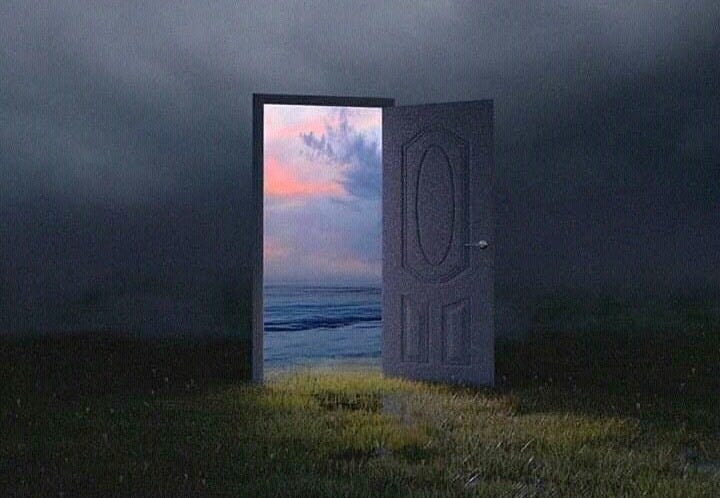
Let me frame it like this: Imagine a door you learned to open by pushing. It’s worked your whole life. Then one day, you come across a door that looks exactly the same, but it doesn’t open when you push it.
You push. Nothing. You push harder. Still nothing. You assume it’s stuck. You walk away. You blame the door. You circle back and push again.
Using more force or concluding that the door is the one with the issue does absolutely nothing for you. Taking a moment to pause, notice, and loosen your insistence on how things should work is what eventually opens it. You changed your strategy, decided to try pull instead, it opened, and you accessed a whole new world.
Or, as my friend comedically put her version: hurling her body full-speed at the door only to realize that when she saunters up slowly, it has a motion sensor and opens effortlessly on its own.
Let me explain how this applies. When I was growing up, I learned that managing my environment was the surest way to safety. If I could anticipate, understand, explain, outthink or control what was happening around me, I could manufacture a sense of safety in a place that felt unpredictable. But, I no longer require that type of vigilance to feel safe. The context of my life has changed, and when I act out that old strategy of pushing the door, I’ve exited the conversation with the present moment (plot twist: the only place where life is actually ever happening).
I stopped consistently writing my newsletter in April when I started to conceptually understand just how much I had been avoiding discomfort (and peace), by trying to force all of my old strategies in circumstances where they no longer made any sense. There was no thinking left to do, now I had to actually live the lesson. So, I set down my analytical pen, and stepped back into my life, wobbly-footed and a little curious.
When my boyfriend and I circled a familiar argument, I eventually stopped pushing him to see things from my perspective (the right one, of course), and let him have his own experience without trying to change it. I sat with my emotions, let myself return to calm, and came back to him more curious instead of dismissive. I started to create more space for two truths to exist at once. I noticed how much fear drove my need for him to understand my side of things. And, when that fear wasn’t driving, how much easier it was for both of us to reach an understanding of the other… and actually laugh our way through difficult topics.
When I sat down to work or create, I paid attention to when I was pushing through meal times and rest periods claiming that, “I was just in a flow and didn’t want to lose momentum.”
*Cough, cough* – that’s adrenaline, not sustainable momentum.
I would notice my shoulders tensing, my breath shortening, and my focus narrowing to a laser point. Instead of honoring those signals, I had been bulldozing through them. But, when I honor my body’s cues: pause, stretch, or have lunch, it turns out that I return to my projects refueled instead of drained. Where giving myself to something once led straight to burnout, now everything I poured into was beginning to enrich me in return.
I took a back seat to working overtime on things that had nothing to do with me. From a nervous-system perspective, being oriented outward means your attention is primarily organized around external cues rather than internal signals. When I was young, I learned that feelings of safety happen through the outside world (reassurance, feedback, control, performance) rather than from inside. When you’re operating like this, it’s more readily available for you to pay attention to other people, help solve their problems, manage their emotions, and neglect properly tending your own. Rather than stepping in immediately with others, I paused. I stayed with myself a moment longer and sometimes, the most supportive choice was simply not intervening at all.
We can sum it up simply, like this:
Drains:
– Forcing my perspective to be understood
– Powering through work or creativity at the expense of my body
– Taking responsibility for fixing problems that weren’t mine
Fuels:
– Staying differentiated in relationship instead of fused
– Taking breaks like a human being, not a machine
– Consciously deciding if I can help, if I want to, and how to do so without self-abandonment
As I imperfectly faced life’s challenges with greater openness, focusing on my inner self rather than trying to control external circumstances, and began pausing instead of pushing… a few things started to shift…
I noticed, more clearly than ever, my system’s tendency toward over-responsibility, over-extension, and trying to control the external to feel safe.
The subtle undercurrents of my nervous system, constantly on high alert, became visible.
I saw patterns as they arose.
I interrupted autopilot reactions more often.
I sat with real waves of both discomfort and ecstasy without needing to resolve them.
I began to inhabit peace as an experience, not just an idea.
I became less interested in being right than in staying honest.
I let love expose me instead of using insight as armor.
I practiced staying open a beat longer than I knew how to before.
I trusted a little more.
I gripped a little less.
I watched intimacy start to deepen in every area of my life.
My health, my relationships, and my overall sense of aliveness have all been better for it.
This morning wasn’t just deciding to have a good attitude about a broken heater, it was a microcosm of how life keeps nudging me out of my head and back into my body. Life, in its small interruptions, offers the chance to orient back to yourself, respond in real time, and reclaim agency. I could’ve gritted my teeth through my usual routine in the frigid air, or complained that I had to be cooped up in my room, but instead, I noticed that the exact right thing for me to do today was breathe a little life into my desk, and take a small step back toward the practice that I had set down in April.
I couldn’t out-think a broken heater anyway (I’ll leave that to the HVAC professionals 😉), and I’m glad I didn’t try to. All there was to do was feel the chill on my skin, ask what was needed in that moment, and move toward it. Sometimes this practice feels effortless. Other times, moving toward what’s needed feels uncomfortable, uncertain, and nearly impossible. What I’m finding, curious and wobbly-footed, is that those are the moments that equip us to open a familiar-looking door into what turns out to be an entirely new world.